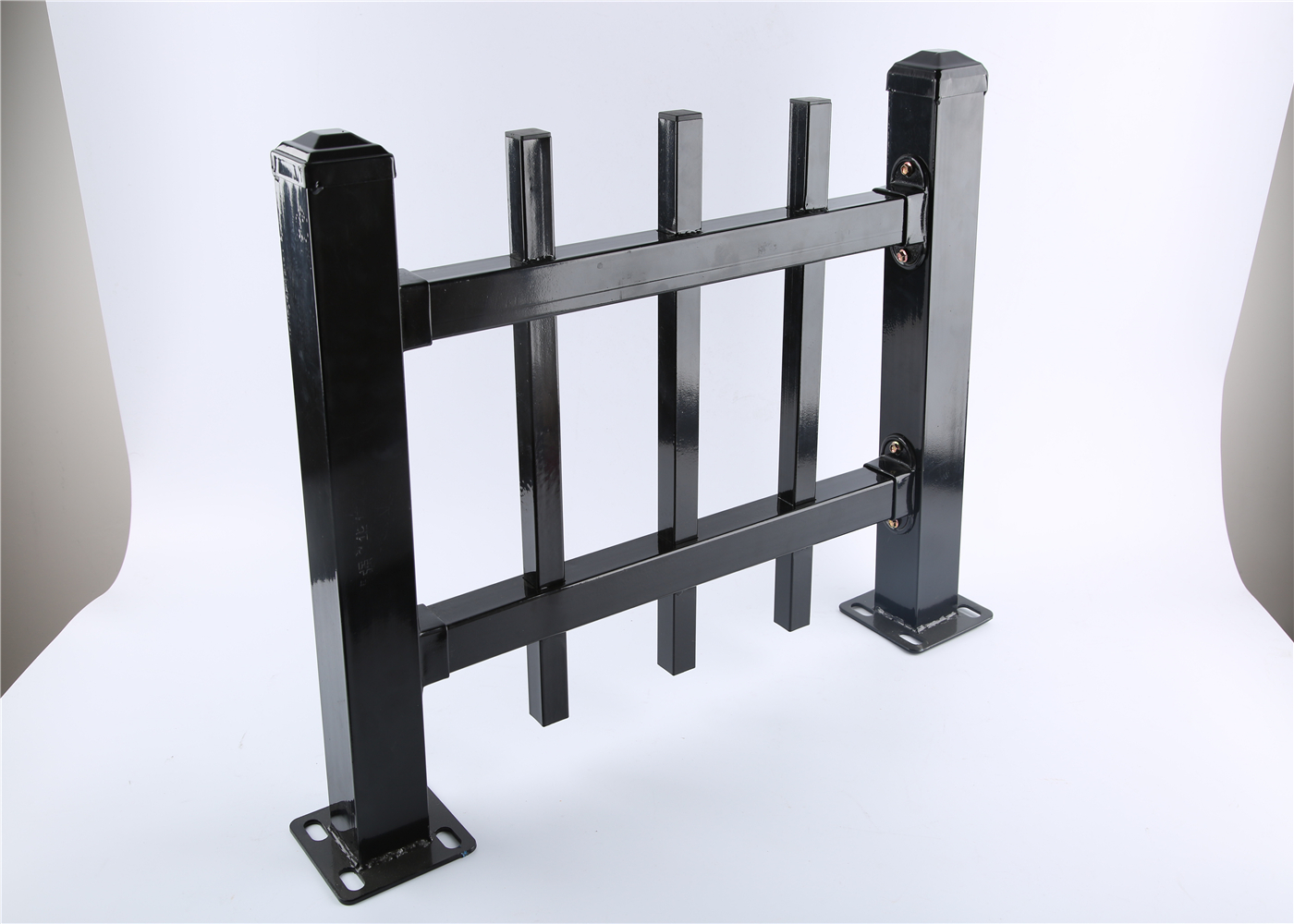
Garrison Fencing Post
65mmx65mm & 75mmx75mm
A$55.00A$38.00
Garrison fencing is a popular high-security fence system used in various commercial, industrial, and governmental installations. Its robust design, consisting of tubular steel panels mounted onto strong posts, provides a formidable barrier against intrusion while offering an aesthetically appealing, durable solution. The foundation of this system relies on the quality and design of the Garrison fencing posts that support the entire structure.
In this article, we will cover everything you need to know about Garrison fencing posts, including types, materials, specifications, installation, and advantages.
1. What Are Garrison Fencing Posts?
Garrison fencing posts are vertical steel supports designed to hold welded tubular steel panels in place. These posts are often square hollow sections (SHS) made from galvanized steel and are equipped with various mounting brackets and fittings for attaching the fence panels. The posts are primarily designed for high-security environments like military bases, correctional facilities, industrial estates, and commercial properties.
Garrison posts can withstand impact, weather elements, and any tampering attempts, offering a long-term fencing solution.
2. Types of Garrison Fencing Posts
There are three main types of Garrison fencing posts, each designed for a specific purpose:
a. End Posts
Function: End posts are used to anchor the first and last panels of a fence line. They are usually found at the perimeter's beginning and end.
Key Features:
Connection: They are connected to the panel on one side only.
Strength: Typically thicker and stronger than line posts to handle higher stress from tension.
Dimensions: Commonly, end posts come in dimensions such as 60 mm × 60 mm or 75 mm × 75 mm, with wall thicknesses around 3 mm.
b. Line Posts
Function: Line posts are used in the middle of fence runs to support the panels.
Key Features:
Connection: These posts feature brackets on both sides for mounting panels.
Strength: These are usually less robust than end posts since they are not subjected to high stress.
Dimensions: Similar to end posts, line posts are often made from 60 mm × 60 mm or 75 mm × 75 mm SHS, with a wall thickness of around 2.5 mm to 3.0 mm.
c. Corner Posts
Function: Corner posts are essential when the fence line needs to change direction (i.e., form a corner).
Key Features:
Connection: Designed with brackets to accommodate two intersecting fence panels.
Strength: Corner posts are built to handle more pressure due to the angle, so they are typically the strongest type of post.
Dimensions: These posts are often larger, such as 75 mm × 75 mm or 100 mm × 100 mm, with a wall thickness of up to 3.5 mm.
3. Materials and Dimensions
Garrison fencing posts are generally constructed using galvanized steel, which is highly resistant to corrosion. Some may also be powder-coated to improve both appearance and durability. The posts typically come in a range of sizes to meet various security needs. Below are the most common materials and dimensions for Garrison posts:
Post Type | Dimensions (mm) | Wall Thickness (mm) | Material | Weight (Approx.) |
|---|---|---|---|---|
End Post | 60×60, 65×65, 75×75 | 2.5–3.0 | Galvanized Steel | 5–8 kg/m |
Line Post | 60×60, 65×65, 75×75 | 2.5–3.0 | Galvanized Steel | 4–6 kg/m |
Corner Post | 75×75, 100×100 | 3.0–3.5 | Galvanized Steel | 8–12 kg/m |
60 mm × 60 mm: Lighter duty, suited for smaller installations or where security is moderate.
65 mm × 65 mm: A balance between the lightweight 60 mm version and the more robust 75 mm version, often used in residential or smaller commercial settings.
75 mm × 75 mm: Standard size used for most commercial and industrial fencing installations, offering a strong balance of durability and strength.
100 mm × 100 mm: Heavy-duty posts designed for maximum strength in high-security installations like prisons, airports, and military bases.
4. Installation of Garrison Fencing Posts
Proper installation of Garrison fencing posts is crucial to ensure the strength, durability, and effectiveness of the entire fencing system. The general installation process involves the following steps:
a. Site Preparation
Excavation: Dig holes for each post according to the required embedment depth (usually between 450 mm and 750 mm).
Concrete Foundation: Prepare a concrete foundation in the holes to anchor the posts securely. For high-security areas, additional reinforcement may be necessary.
b. Post Placement
Alignment: Place the posts into the holes, ensuring they are perfectly vertical (plumb). Use a level to check alignment.
Anchoring: Use chemical anchors or expansion bolts to secure the posts firmly into the ground. Once in place, ensure that the posts are stable before continuing.
c. Panel Attachment
Brackets: Install brackets or clips onto the posts that will hold the fence panels in place.
Panel Mounting: Position the panels between the posts, and use tamper-resistant screws or pop-rivets to attach the panels to the posts.
d. Final Checks
Alignment and Tensioning: Ensure all posts and panels are aligned properly. Tension the panels slightly if needed to remove any slack.
5. Advantages of Garrison Fencing Posts
Security: The rigid construction of Garrison fencing posts makes them ideal for high-security applications. Their robust nature ensures that the fence can withstand impact, cutting, and other forms of tampering.
Durability: Galvanized steel posts with powder-coating or hot-dip galvanization offer long-term resistance to corrosion, making them suitable for harsh weather conditions.
Aesthetic Appeal: The neat, uniform look of Garrison fencing is visually appealing, making it suitable for both security and commercial aesthetics.
Low Maintenance: Garrison fence posts require minimal maintenance after installation. Occasional inspections and minor touch-ups to the finish may be needed.
Customization: Garrison fencing posts can be customized to fit various heights and configurations, such as adding barbed wire, razor wire, or security spikes.
6. Disadvantages of Garrison Fencing Posts
Cost: Garrison fencing tends to be more expensive compared to traditional chain-link or wire mesh fencing due to the material quality and robust design.
Installation Complexity: The installation of Garrison fencing requires precise planning, specialized tools, and expertise. It is often recommended to hire professionals for proper setup.
Weight: Garrison fence posts, especially those made from heavy-duty materials, can be quite heavy, making them challenging to handle during installation.
7. Conclusion
Garrison fencing posts are an essential component of a high-security fencing system. Whether used for military bases, correctional facilities, or commercial properties, these posts provide robust support, ensuring that the fence system remains strong and durable for years. The strength, versatility, and durability of Garrison fencing posts make them an excellent choice for anyone requiring a secure, long-lasting fencing solution.
By understanding the various types, materials, installation requirements, and benefits of Garrison fencing posts, property owners and security professionals can make an informed decision on the best fencing solution for their needs.
14 days
TT
Blacks